Quick Commerce vs Online Shopping: Which Should You Use?
Ten-minute apps and normal online shopping both drop parcels at your door, but they work in very different ways. Here is a simple, honest guide to what each one is best at, and an easy way to pick the right one every time.
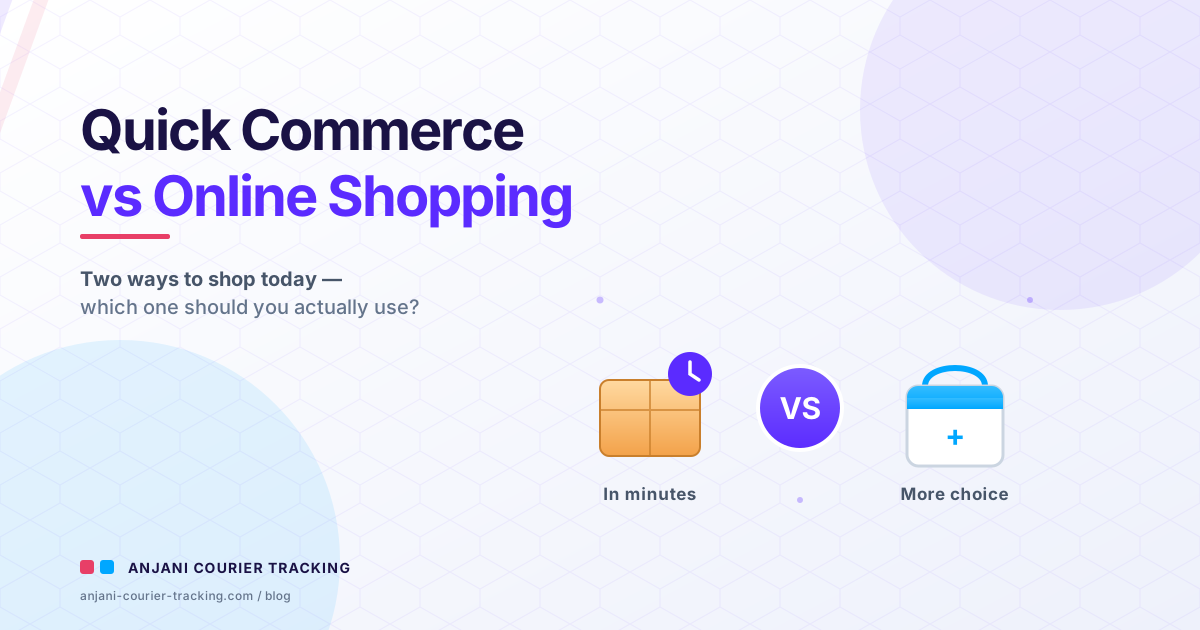
You need something. Do you open a 10-minute app, or a regular shopping site? Both will bring a parcel to your door, so it is easy to think they are the same thing. They are not.
They are built for two very different jobs. Pick the wrong one and you either wait too long or pay too much. Pick the right one and shopping feels easy. Let us break down the difference in plain words, with no jargon.
What Is Quick Commerce?
Quick commerce is the “I need it now” kind of shopping. These are the apps that promise milk, snacks, soap, or a charger in ten to twenty minutes.
They pull this off by keeping a small set of popular items in tiny local stores spread across a city. When you order, the item is already waiting close by, so it only has to travel a short distance. We explained this whole setup in how 10-minute delivery actually works, and the short ride that follows in how delivery riders reach your door so fast.
The trade-off is choice. A quick-commerce app holds only a few hundred everyday things. You will not find a rare gadget, a special-size shoe, or one odd spare part. Speed is the whole point, and to stay fast, the list stays short.
What Is Normal Online Shopping?
Normal online shopping is the “I want exactly this” kind. Think of the big stores that sell almost everything — clothes, electronics, books, tools, furniture, brands from all over.
Here the product usually does not sit near you. It rests in a large faraway warehouse, and once you order, it travels a longer road to reach you. That road takes a day or several days. We mapped out those real timelines in our state-wise courier delivery time guide.
The trade-off here is speed. You wait longer. But in return you get a huge range, more brands, easy comparing, and often a better price because big stores buy in bulk.
Speed: The Clearest Difference
This is the line that splits the two.
- Quick commerce: minutes. Great when you forgot something and need it right away.
- Online shopping: a day or several days. Fine when you can plan ahead.
If the clock matters more than anything — a guest is coming, you ran out of a basic item — quick commerce wins easily. If you can wait, the longer road is usually worth it.
One handy thing about the longer trips is that you can follow them. A normal parcel gives you a tracking number and a journey to watch, with a delivery date that updates as it moves. We explained how that date is worked out in how AI guesses your delivery date.
Price and Choice
Speed is not free. Quick commerce often adds a small delivery fee, and prices can sit a touch higher because running many tiny stores costs money.
Normal online shopping usually wins on both price and choice. Big stores carry millions of items and can offer deals, discounts, and bulk savings that a small local store simply cannot match.
So a rough rule forms on its own. Quick commerce is for small, urgent, everyday buys. Online shopping is for bigger, planned, or special buys where you want the best price and the widest pick.
A Few Everyday Situations
Rules are easy to forget, so let us make it real. Here are a few common moments and the smart pick for each.
Guests are at the door and you are out of cold drinks. This is quick commerce, plain and simple. You need it now, it is a basic item, and the price gap of a few rupees does not matter when the clock is against you.
You want a new pair of running shoes in your exact size. This is online shopping. You need a specific size and style, you want to compare brands, and you can happily wait a couple of days. A local store will not have your exact pick sitting nearby.
You ran out of a medicine you take daily. Quick commerce, if the app carries it. Speed matters here, and it is a known, everyday item.
You are setting up a new kitchen and need many things. Online shopping wins. You get the full range, better deals on a big order, and you are planning ahead anyway, so the wait is fine.
See the pattern? It is never really about which app is “better”. It is about your need in that moment — how fast, how special, and how much price matters.
What About Returns and Problems?
One more honest difference. If something is wrong, the two handle it differently.
With quick commerce, a missing or bad item is usually sorted fast — a quick refund or a fresh drop, often the same day, because the store is close. With normal online shopping, returning a larger or pricier item can take longer, since it has to travel the long road back. That is not a flaw, just the nature of a bigger network. Knowing this ahead of time saves you a lot of worry when a parcel does not arrive perfect.
How You Pay Can Differ Too
The two also feel different at checkout. Quick-commerce apps lean heavily on instant online payment, since the order moves in minutes. Normal online shopping gives you more room, and many shoppers still like paying when the parcel arrives. If that is you, our guide on cash on delivery and how it works is worth a read.
A Simple Way to Choose
You do not need a chart. Just ask yourself three quick questions before you order.
1. Do I need it in the next hour? If yes, open the quick-commerce app. If no, a regular store will likely save you money.
2. Is it an everyday basic, or something special? Milk, snacks, and soap suit quick commerce. A specific brand, size, or rare item belongs on a big shopping site.
3. Does price matter more than speed? If you want the best deal and can wait, the longer road usually pays off.
Answer those three and the right choice is obvious almost every time. Many people end up using both — quick apps for daily top-ups, big sites for the planned and the special. There is no single winner. There is only the right tool for the moment.
The Bottom Line
Quick commerce and online shopping are not rivals. They are two tools for two needs.
Quick commerce trades choice for speed. It keeps a few popular items close and rushes them over in minutes. Normal online shopping trades speed for choice and price. It opens up a massive range and brings it over a longer road.
Need it now and it is a basic? Go quick. Want range, a special item, or the best price, and you can wait a bit? Go normal. Once you see them as two tools instead of one, you will reach for the right one without a second thought.
And no matter which road your order takes, you can always track your parcel from our homepage and know exactly when it will arrive.